Elden Ring poise determines whether your character gets staggered when taking hits.
The most important breakpoints are:
- 51 poise: resists many common PvE light attacks (daggers, straight swords) — effectiveness varies by enemy type
- 61 poise: medium weapon trades — trade through katana and straight sword attacks
- 101 poise: heavy weapon trades — trade with greatswords and colossal weapons
This guide explains every poise breakpoint, hyper armor interaction, and the best armor setups for PvE and PvP. Before optimizing your build, use the Elden Ring Build Calculator to plan your stat allocation.
See also: How Stance Damage Works for the related combat mechanic.
Quick Answer
Poise is a hidden stat that controls whether your character gets interrupted when hit during an attack.
It does NOT reduce damage. It only determines if you stagger or continue your attack.
The three numbers to remember:
- 51 poise — allows you to resist many common PvE light attacks (daggers, straight swords)
- 61 poise — medium weapon trading, recommended for most melee players
- 101+ poise — heavy weapon trading, for greatswords and colossal weapons
Poise comes from armor only. There is no weapon, spell, or consumable that increases it directly.
Poise = "can I finish my attack?" not "how much damage do I take?"
How Much Poise Do You Need in Elden Ring?
The answer depends on your weapon and playstyle. Here is the breakdown:
| Poise Target | Best For | Recommended Builds |
|---|---|---|
| 51 Poise — Casual PvE | Light attacks, ranged builds, sorcery playstyle | Dexterity builds, Intelligence builds, Faith builds, Dex sorcery hybrids |
| 61 Poise — Melee Trading | Resist medium weapon attacks while trading blows | Greatsword builds, Katana builds, Strength/Dex hybrids, straight sword builds |
| 101+ Poise — Heavy Weapons | Trade through heavy enemy attacks, boss exchanges | Colossal weapon builds, Lion's Claw builds, charged attack builds, pure Strength builds |
Poise Breakpoint Chart
The following table shows the key poise breakpoints and what each tier unlocks:
| Poise | What It Helps Against | Example Builds |
|---|---|---|
| 0–30 | Light builds — rely on dodging | Mage, Dex, Sorcery |
| 51 | Common PvE light attacks (daggers, straight swords) | Most PvE melee builds |
| 61 | Medium weapon trades (katanas, greatswords) | Katana, Straight Sword, Greatsword |
| 71 | PvP pressure resistance | Competitive PvP builds |
| 81 | Stronger PvE enemy attacks and boss light attacks | Greatsword / Greataxe builds |
| 101 | Heavy weapon trades | Greatsword, Greataxe, Colossal |
| 125+ | Maximum hyper armor builds | Strength, Colossal builds |
Poise Breakpoint Infographic
Quick visual reference for the three most important poise breakpoints:
| Poise | What You Get | Who It's For |
|---|---|---|
| 0–50 | Basic PvE — you will stagger against most boss light attacks | Mages, sorcery builds, pure ranged players |
| 51 | Basic PvE resistance — trade through common enemy attacks | Most PvE melee builds (Dex, Faith, light Strength) |
| 61 | Melee trading unlocked — resist medium weapon attacks | Greatsword, Katana, hybrid melee builds |
| 101 | Heavy weapon trading unlocked — trade through boss attacks | Colossal weapons, Lion's Claw, charged attack builds |
Bull-Goat Talisman Poise Calculator
Bull-Goat's Talisman increases total poise by approximately 33%. Here is a quick reference showing base armor poise versus poise with the talisman equipped:
| Armor Set | Base Poise | With Bull-Goat Talisman |
|---|---|---|
| Veteran Set | 77 | ~102 |
| Bull-Goat Set | 100 | ~133 |
| Lionel's Set | 85 | ~113 |
| Mixed (Veteran Helm + Bull-Goat Armor) | 91 | ~121 |
| Typical 51-poise mix | 51 | ~68 |
The 33% multiplier means that with Bull-Goat's Talisman, a set that provides 51 base poise becomes approximately 68 — crossing the 61 breakpoint. Similarly, a Veteran Set (77 base) becomes ~102, reaching the 101 breakpoint.
Pro tip: Use Bull-Goat's Talisman to unlock higher breakpoints without committing to the full Bull-Goat armor set. This is especially valuable for builds that want medium rolling (medium equip load) while still hitting 61 or 101 poise.
See also: Best Strength Builds for builds that pair high poise with heavy weapons.
What Is Poise in Elden Ring?
Poise is a hidden threshold system that controls stagger resistance. Every attack in Elden Ring has a poise damage value. Every character has a poise value determined by their equipped armor.
When you are hit:
- If incoming poise damage exceeds your poise threshold → you stagger
- If it does not → you continue your action without interruption
Poise is most relevant during attack animations. When idle, running, or rolling, poise has little to no effect. This is why heavy weapons with strong attack animations feel unstoppable — their hyper armor frames, combined with high poise, let the character trade through enemy attacks.
One of the biggest mistakes players make is confusing poise with defense:
- Defense reduces HP loss — comes from armor and talismans, always active
- Poise prevents stagger — comes from armor only, matters most during attacks
A player with 100 poise and no damage reduction will die just as fast as a player with 0 poise — but they will finish their attack before dying.
Is 51 or 61 Poise Better?
For most PvE players, 51 poise is enough to handle the majority of enemy attacks without being interrupted.
61 poise becomes valuable when you want to trade against stronger enemy attacks or use slower weapons like greatswords and heavy Ashes of War.
If your build uses:
- Greatswords
- Colossal weapons
- Heavy Ashes of War (Lion’s Claw, Stalwart Slash, etc.)
aim for 61+ poise. The extra poise lets you trade through attacks that would stagger you at 51.
See Best Strength Builds for builds that pair high poise with heavy weapons.
Hyper Armor Explained
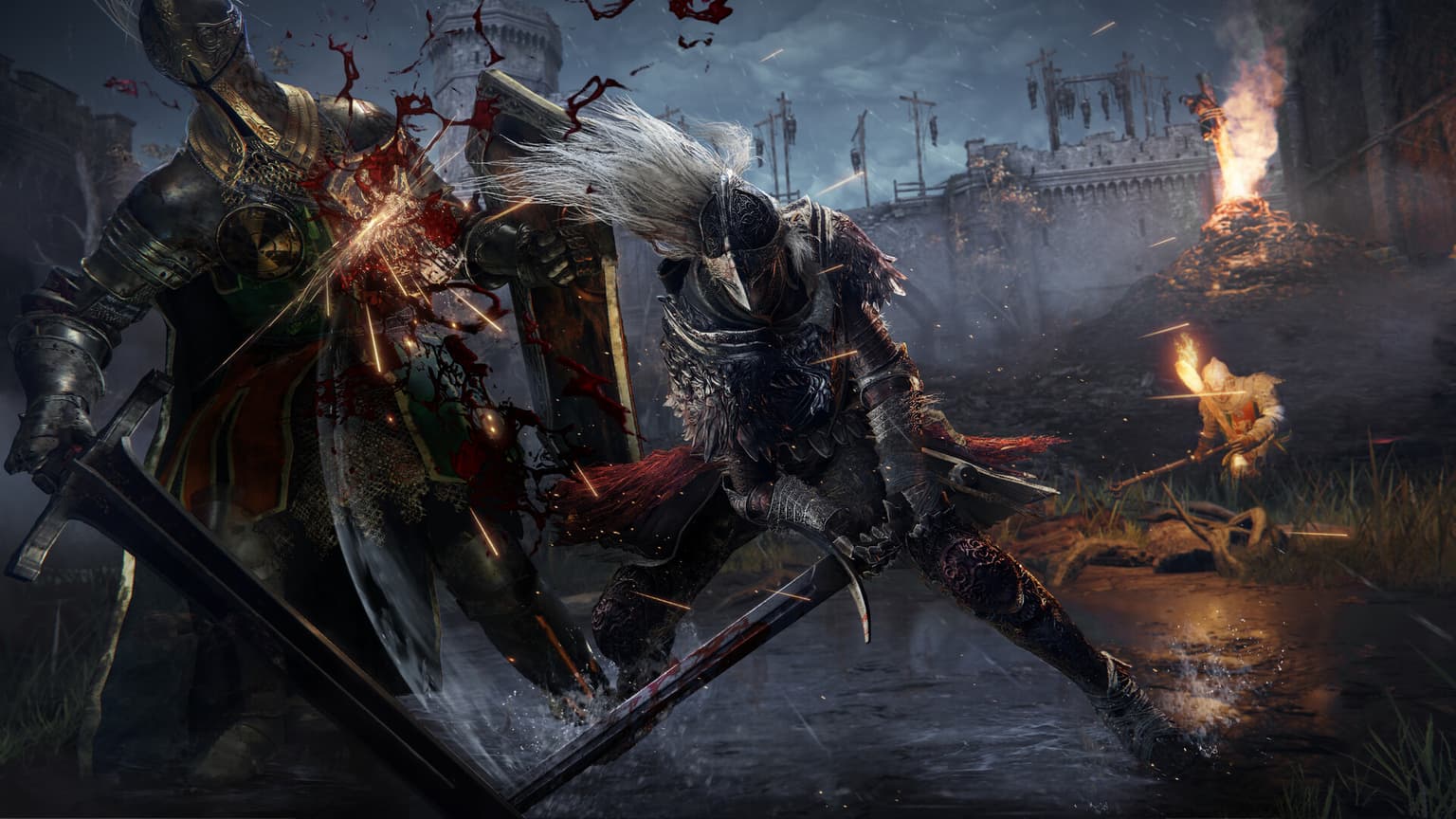
Hyper armor is a state during certain attack animations where your character is less likely to be interrupted by incoming hits.
Important: Hyper armor is not determined by weapon class alone. A Greatsword's normal R1, charged heavy attack, running attack, and jump attack all have different hyper armor values. The same is true for Colossal Swords, Great Katanas, and Halberds — each attack animation carries its own hyper armor rating.
Poise and hyper armor work together: high poise raises your base threshold, and hyper armor increases it further during heavy attacks. This is why a Greatsword user with 61+ poise using a charged heavy attack can trade through most enemy attacks.
Not all attacks have hyper armor. Light weapons like daggers and straight swords typically have minimal or no hyper armor frames, which is why they rely on speed and evasion instead of trading.
See also: Greatsword Build Guide for weapon-specific hyper armor details.
Which Weapons Have The Best Hyper Armor?
Heavy weapons naturally have stronger hyper armor frames. The table below ranks weapon types by hyper armor strength:
| Weapon Type | Hyper Armor |
|---|---|
| Colossal Weapons (Great Hammer, Giant-Crusher) | ★★★★★ |
| Greatswords (Greatsword, Great Katana) | ★★★★ |
| Greataxes (Greataxe, Axe of Godrick) | ★★★★ |
| Halberds (Halberd, Greathalberd) | ★★★ |
| Katanas (Uchigatana, Nagakiba) | ★ |
Elden Ring Weapon Poise Damage Explained

Every weapon class deals different poise damage to its target. Understanding this helps you choose the right weapon for breaking enemy poise.
| Weapon Type | Poise Damage |
|---|---|
| Daggers | Low |
| Straight Swords | Low-Medium |
| Katanas | Medium |
| Spears | Medium |
| Greatswords | High |
| Colossal Weapons | Very High |
| Charged Heavy Attacks | Highest |
A Strength build with high poise should also be tested with the Weapon AR Calculator to confirm damage output matches defensive capability.
Best Poise Armor in Elden Ring
Poise comes from armor only. Here are the top sets:
Bull-Goat Set
- Total poise: 100
- Heaviest armor in the game
- Requires high Endurance (40+) or Great-Jar’s Arsenal
- Best for colossal weapon builds
Lionel’s Set
- Total poise: 85
- Slightly lighter than Bull-Goat
- Good balance of protection and mobility
Veteran’s Set
- Total poise: 77
- Popular for PvP builds
- Excellent weight-to-poise ratio
Bull-Goat’s Talisman
- Increases poise by approximately 33%
- With Veteran Set (77 base): ~102 poise (reaches 101 breakpoint)
- With Bull-Goat Set (100 base): ~133 poise (maximum)
- With typical 51-poise mix: ~68 poise (crosses 61 breakpoint)
Pro tip: Mix armor pieces to hit exact breakpoints. For example, Veteran’s Helm + Bull-Goat Armor + Veteran’s Gauntlets + Veteran’s Greaves gives you 77 poise at lower weight than the full Bull-Goat set.
See also: Best Strength Builds for armor recommendations paired with high-poise weapon builds.
Best Poise Builds in Elden Ring
Here are three proven builds that optimize poise for different playstyles:
1. Strength Colossal Build (101+ Poise)
- Vigor: 60
- Endurance: 40
- Strength: 80
- Armor: Bull-Goat Set
- Weapon: Giant-Crusher +25
- Trades through almost anything. Poise through boss attacks with 2–3 charged heavies.
2. Greatsword Hyper Armor Build (61+ Poise)
- Vigor: 60
- Endurance: 33
- Strength: 54 (two-handing = 81 effective STR)
- Armor: Veteran’s Set
- Weapon: Greatsword +25 with Lion’s Claw
- Balanced for PvE and PvP. Hits the 61 poise breakpoint for medium weapon trading.
3. PvP Poise Build (71+ Poise)
- Vigor: 60
- Endurance: 35
- Strength: 50
- Dexterity: 50
- Armor: Veteran’s Set with Bull-Goat Talisman
- Weapon: Zweihander +25 or Claymore +25
- Designed for invasions and duels. 71+ poise lets you ignore light weapon pressure.
Plan your exact stat allocation and test these builds with the Elden Ring Build Calculator.
Common Poise Mistakes
Mistake 1: Confusing poise with defense
High poise does not reduce damage. You still need Vigor and damage negation.
Mistake 2: Ignoring weight load
Heavy armor = high poise, but also heavy weight load. Stay at Medium Load or below. Use the Build Planner to check your equip load before finalizing.
Mistake 3: Building poise for light weapons
Daggers, curved swords, and fists benefit minimally from poise because they lack hyper armor frames. Poise is most valuable on weapons with hyper armor — greatswords, colossal weapons, and heavy Ashes of War.
Mistake 4: Assuming poise works all the time
Poise mainly matters during attack animations. When idle, running, or rolling, poise has little to no effect on whether you get staggered.
FAQ
How much poise should I have in Elden Ring?
For most PvE builds, 51 poise is a good minimum target. Heavy melee builds usually aim for 61–101+ poise depending on your weapon class.
What is the best poise breakpoint?
For PvE, 61 poise is the most practical target. It handles most boss attacks and is achievable with mid-weight armor. 101+ is for dedicated heavy weapon builds.
Does 51 poise still work in PvE?
Yes. 51 poise is enough for most PvE scenarios. It lets you trade with standard enemy attacks. 61+ is only necessary for heavy weapon builds or boss-heavy content.
Does Bull-Goat Talisman stack with armor?
Yes. Bull-Goat’s Talisman increases your total poise by approximately 33%, on top of your armor’s base poise value.
Does poise work while dodging?
No. Poise mainly matters during attack animations. When rolling or dodging, poise has little to no effect.
Why do I still get staggered with 100 poise?
Some attacks — especially charged heavy attacks from colossal weapons and certain boss moves — deal poise damage that exceeds even 100. No poise value makes you completely unbreakable.
Does poise reduce damage taken?
No. Poise only prevents stagger. Damage reduction comes from armor defense values, talismans like Dragoncrest Greatshield, and buffs like Golden Vow.
Is poise important in PvP?
Yes. Poise heavily affects trade outcomes and pressure control. At 71+ poise, you can ignore light weapon pressure and force trades. Most competitive PvP builds aim for at least 61 poise.
Conclusion
Poise is not a secondary stat. It is a core combat system that defines who wins trades and who controls tempo in melee exchanges.
The key breakpoints to remember: 51 for basic PvE, 61 for medium weapon trading, and 101 for heavy weapon trading. Pair these with the right armor — Bull-Goat set for maximum poise, or mixed pieces for efficient breakpoints — and the right weapon with strong hyper armor.
Once understood, poise explains why some weapons feel unstoppable while others feel fragile.
Use the Elden Ring Build Calculator to plan your armor weight, stats, and poise breakpoints before you commit.